Choosing the right Ultraviolet Light Lamp requires more than comparing wattage or browsing attractive product photos. The correct choice depends on the target application, wavelength, exposure distance, operating time, and surrounding conditions. A lamp designed for surface treatment may not suit water systems or air-handling equipment. That difference matters.
Dr. James R. Bolton, a recognized ultraviolet-disinfection researcher, has described UV disinfection as “a physical process, not a chemical one.” His statement highlights an important point: performance depends on delivered UV dose, not marketing claims alone. Buyers should check irradiance data, lamp life, warm-up time, replacement costs, and testing methods. Certification documents should be clear and traceable. So should the safety instructions.
Look closely at the installation space. A dusty quartz sleeve can reduce output. A lamp placed too far from the target may deliver insufficient energy. Reflective surfaces can improve coverage, but they cannot repair poor design. Ozone generation also deserves attention, especially in occupied rooms. Choose equipment with suitable shielding, interlocks, and professional installation guidance.
This guide compares key specifications and practical purchasing factors. It also considers reliability after installation, not just performance on day one. No selection method is perfect. Product labels can be confusing, and published test results may not match real conditions. That is why careful verification remains essential. A dependable Ultraviolet Light Lamp should fit the complete system, meet recognized safety requirements, and provide evidence for its claimed performance. Words are not enough. Measure the details.
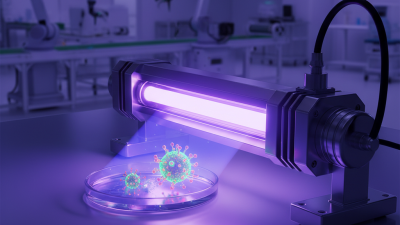
An ultraviolet light lamp produces electromagnetic radiation beyond visible violet light. Its effect depends on wavelength, intensity, and exposure time. UVA reaches deeper into materials and skin, while UVB carries more biological energy. UVC has shorter wavelengths and can damage microbial DNA or RNA. This prevents many microorganisms from reproducing, but it does not instantly remove every contaminant.
When choosing China’s best ultraviolet light lamp, start with the intended application. Ask for measured irradiance, wavelength data, electrical specifications, and independent test reports. A reliable manufacturer should explain how performance changes with distance, temperature, lamp age, and dust. Quartz tubes require careful handling. Some mercury lamps also need controlled disposal, which buyers often overlook. LED-based options may offer compact designs, but their output and service life need practical verification.
I have found that attractive power ratings can be misleading. A high wattage does not always mean a higher germicidal dose. Compare the delivered dose at the real operating distance, not only the lamp’s input power. Use shielding, interlocks, warning labels, and protective procedures because direct UVC exposure can injure eyes and skin. Never rely on smell or visible brightness to judge effectiveness. A lamp can look bright and still deliver insufficient ultraviolet energy. Before purchase, request test records from a qualified laboratory and check whether the supplier provides replacement parts and clear operating instructions. Performance claims deserve careful questions.
Choosing China’s best ultraviolet light lamp starts with the application, not the supplier’s wattage claim. Different ultraviolet lamp types create different results. A lamp for water disinfection may be unsuitable for curing resin or inspecting surfaces.
Low-pressure mercury lamps commonly produce strong output near 254 nanometers. They suit water, air, and surface disinfection systems when exposure time and shielding are properly designed.
Medium-pressure lamps provide broader ultraviolet output and higher intensity. They fit industrial water treatment and some printing processes, but they generate more heat and require stronger cooling.
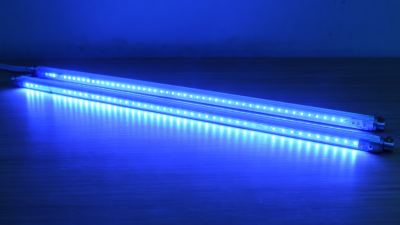
UV-C LED lamps offer compact construction, instant switching, and flexible layouts. They work well in small treatment chambers, sensors, and portable equipment. However, their output can decrease with heat, so thermal management matters.
For curing coatings, adhesives, or inks, UVA lamps around 365 to 395 nanometers are often more suitable. Check the material’s curing spectrum before purchasing. For inspection, a UVA lamp with controlled visible light is usually easier to use than a germicidal lamp.
I have seen buyers compare only rated power, then discover uneven irradiance at the target surface. That approach needs reconsideration.
Measure wavelength, irradiance, lamp life, cooling, and replacement access. Ask for test data under operating conditions, not only laboratory figures.
Safety also needs attention: use interlocks, shielding, warning labels, and protective equipment. Selection is rarely perfect at the first attempt. A small pilot test can expose weak coverage, excessive heat, or an unsuitable wavelength before full installation.
How to Choose China’s Best Ultraviolet Light Lamp?
Choosing a suitable ultraviolet lamp starts with its working wavelength. Low-pressure mercury lamps often produce ultraviolet-C near 254 nanometers, while ultraviolet LEDs may use different bands. Match the wavelength with your process, not with a sales slogan. Do not trust labels alone. Request a spectral test report from an independent laboratory. A calibrated spectroradiometer can confirm the peak wavelength and unwanted emissions. This matters because a small spectral shift may reduce performance or affect materials.
Output should be measured at the actual working distance. Ask for irradiance in milliwatts per square centimeter, not only electrical wattage. Calculate the delivered dose by multiplying irradiance by exposure time. Check readings at several points, especially inside chambers or along conveyor paths. Uneven output is common. A lamp can look bright but provide weak ultraviolet energy where treatment occurs. I once overlooked distance during a comparison, and the results became misleading.
Service life includes more than the advertised operating hours. Review the rated useful life, output depreciation, start-stop cycle, operating temperature, and replacement method. Quartz sleeves, ventilation, and clean surfaces can strongly influence performance. Ask whether the supplier provides batch records, calibration data, safety instructions, spare parts, and a clear warranty. Verify electrical compliance for your region and request traceable test documents. A reliable manufacturer should explain failure limits honestly, including conditions that shorten lamp life.
Compare the nominal wavelength, typical service life, and relative UV output retained at the end of rated life. The figures below are representative, brand-neutral engineering reference values; actual performance depends on lamp design, operating temperature, ballast or driver, distance, and maintenance.
Selection guideline: 254 nm is widely used for germicidal applications, 280 nm is commonly used in UV-C LED systems, and 365–395 nm is generally used for UVA curing, inspection, and fluorescence. Verify the required irradiance and dose rather than choosing by wavelength alone.
How to Choose China Best Ultraviolet Light Lamp?
A reliable China UV lamp manufacturer should control quality from raw materials to final testing. ISO 9001 certification is useful, but a certificate alone proves little. Ask for batch records, calibration dates, and traceable production data. Each lamp should have a verified wavelength, irradiance value, power rating, and operating life. These figures need test conditions, not only attractive product sheets.
Safety standards deserve close attention. UV-C products should be evaluated under IEC 62471 for photobiological safety, while electrical construction must follow relevant IEC or national requirements. RoHS compliance helps control restricted substances. For export projects, the manufacturer should also explain applicable destination-market rules, documentation, and labeling duties. Ozone generation must be tested when the lamp operates below certain wavelengths. Do not accept “ozone-free” without measured evidence.
Real inspection can reveal what paperwork misses. Check quartz or glass quality, electrode alignment, cable insulation, heat management, and visible defects. Request samples from different batches. Then compare output after repeated operating cycles. Performance can drift.
That matters.
An independent laboratory report strengthens confidence, especially for high-risk installations. However, even good factories may show inconsistent test methods or incomplete records. Ask direct questions, review the answers, and keep acceptance criteria in writing. The best supplier is not always the cheapest. It is the one that can explain weaknesses clearly and correct them consistently.
| Quality Dimension | What a Reliable UV Lamp Should Provide | Typical Technical Data or Acceptance Point | Recommended Verification Evidence | Relevant Standard or Reference |
|---|---|---|---|---|
| UV wavelength | The emission spectrum should match the intended application instead of relying only on a nominal “UV-C” label. | UV-A: 315–400 nm; UV-B: 280–315 nm; germicidal UV-C: 200–280 nm. Low-pressure mercury lamps commonly emit a strong line near 253.7 nm; some also emit 185 nm, which can generate ozone. | Independent or calibrated spectroradiometer report showing peak wavelength, bandwidth, and any secondary emission lines. | IEC 62471 / GB/T 20145 for photobiological evaluation; application-specific regulatory requirements may also apply. |
| UV-C output power | The supplier should declare optical UV output separately from electrical input power. | A lamp rated at 30 W electrical input does not necessarily deliver 30 W of UV-C radiation. The measured UV-C output should be stated in watts under defined voltage, current, temperature, and operating position. | Calibrated UV radiometer or spectroradiometer report with instrument model, calibration date, test distance, and measurement uncertainty. | ISO/IEC 17025 is a suitable reference for the competence of testing laboratories. |
| Illuminance and dose uniformity | For disinfection equipment, the delivered dose should be evaluated at the weakest exposure point, not only at the center. | UV dose is calculated as irradiance × exposure time. Common units are mJ/cm² and J/m²; 1 mJ/cm² equals 10 J/m². The required dose depends on the microorganism, medium, geometry, and target log reduction. | A mapped test report showing multiple measurement points, minimum irradiance, exposure time, and dose distribution. | Use the applicable product or water/air treatment test method; do not treat a single center-point reading as system performance. |
| Electrical input and stability | The lamp and ballast or driver should operate within the specified voltage and frequency range without unstable starting or excessive flicker. | The datasheet should specify rated voltage, frequency, current, power, starting method, operating temperature, and compatible controlgear. Any performance claim should identify the test voltage and ambient temperature. | Electrical safety and performance test records, wiring diagram, ballast compatibility list, and production inspection records. | IEC 60598-1 may apply to luminaires; applicable IEC or national requirements for the lamp, ballast, driver, and finished equipment should be selected according to product design. |
| Photobiological safety | The product should be assessed for ultraviolet exposure risks to eyes and skin, especially when sold as an open-air lamp. | The risk group and exposure information should be determined from measured spectral irradiance and accessible emission. Open UV-C sources require shielding, interlocks, warning labels, or controlled use where applicable. | Photobiological safety assessment, user exposure instructions, warning labels, shielding design, and interlock test results. | IEC 62471:2006 and its applicable national adoption, including GB/T 20145-2006. |
| Ozone generation | The manufacturer should clearly state whether the lamp produces ozone and should not describe an ozone-producing lamp as “ozone-free.” | Emission near 185 nm from some mercury lamps can produce ozone in air. Ozone-free designs generally use glass that blocks the 185 nm line or use a source without that emission; the claim must be supported by testing. | Ozone concentration test under defined room volume, ventilation, operating time, lamp quantity, and temperature conditions. | The applicable occupational, indoor-air, and product safety limits depend on the destination market and intended application. |
| Service life and UV depreciation | Lamp life should be reported together with the reduction in UV output, not only the ability of the lamp to remain lit. | For UV systems, useful life is often defined by the time required for UV output to fall to a stated percentage of initial output. The value varies with lamp type, switching frequency, ballast, temperature, and cleaning conditions. | Aging test curve showing UV output versus operating hours, test conditions, sample quantity, and end-of-life criterion. | The supplier’s life-test method should be documented and linked to the intended operating conditions. |
| Thermal performance | The lamp should maintain its specified output within the recommended ambient and surface-temperature range. | Low-pressure mercury lamp output is temperature-sensitive, while LED UV output is affected by junction temperature and heat dissipation. The datasheet should define the recommended operating range. | Temperature-rise test, thermal design data, airflow requirements, and output measurements at minimum, nominal, and maximum rated temperatures. | Applicable electrical appliance, luminaire, and component safety requirements should be assessed according to the finished product. |
| Mechanical and environmental protection | The lamp assembly should withstand vibration, handling, humidity, and the cleaning conditions expected in service. | For enclosed equipment, the required ingress protection depends on exposure to dust and water. UV-transmitting windows must resist discoloration and should not significantly block the specified wavelength. | IP test report where an IP rating is claimed, material specifications, vibration or transport test records, and window-transmittance data. | IEC 60529 for IP ratings; the applicable mechanical and environmental test requirements depend on the finished equipment. |
| Material and restricted substances | Materials should be traceable and suitable for UV exposure, temperature, electrical insulation, and the destination market. | Plastic parts exposed to UV should be evaluated for yellowing, cracking, and loss of mechanical strength. Hazardous-substance requirements vary by market and product category. | Material declarations, supplier declarations, and laboratory screening reports where required. | EU RoHS Directive 2011/65/EU and REACH may be relevant for products placed on the European market. |
| Production consistency | Batch-to-batch variation in electrical power, UV output, wavelength, and dimensions should be controlled. | A qualified supplier should define incoming-material inspection, process controls, final electrical testing, UV-output sampling, and nonconformance handling. Acceptable tolerances must be written into the purchase specification. | Quality manual, control plan, calibration records, sample inspection results, corrective-action records, and batch traceability. | ISO 9001 is a quality-management-system reference; certification alone does not prove UV performance. |
| Documentation and labeling | Technical information should be complete, consistent, and suitable for safe installation and operation. | Documentation should include model code, wavelength, UV output, electrical ratings, dimensions, operating position, temperature range, service-life definition, ozone status, photobiological warnings, and replacement instructions. | Controlled datasheet, installation manual, product label artwork, safety data, test reports, and revision history. | Labeling and conformity requirements depend on the destination country and final product category. |

Choosing China’s best ultraviolet light lamp requires more than comparing factory prices. I usually request irradiance maps, lamp life curves, and test conditions before reviewing a quotation. A credible supplier should state wavelength, output, operating temperature, and measurement distance clearly. The U.S. EPA’s Ultraviolet Disinfection Guidance Manual uses 40 mJ/cm² as an important validation reference for drinking-water applications, but this dose is not universal. Product claims without dose verification deserve caution.
Certification checks should match the application. For electrical safety, ask for relevant IEC test reports, such as IEC 60335-2-109 for certain water-treatment appliances. IEC 62471 is useful when evaluating photobiological safety risks. Request the certificate number, issuing laboratory, test date, and tested model. A PDF alone proves little. Laboratory accreditation, often linked to ISO/IEC 17025, adds confidence. I have seen suppliers present component certificates for complete systems, which is a common but serious gap.
Price comparison should include replacement lamps, quartz sleeves, ballasts, packaging, freight, and energy use. The cheapest unit may become expensive after six months. A 2023 market analysis by Grand View Research reported continued growth in UV disinfection demand, increasing supplier competition and price variation. Ask for a written warranty, response time, spare-part availability, and remote troubleshooting process. Two years sounds attractive. However, unclear exclusions can weaken it. A practical trial order is safer than trusting polished brochures.