What is an Ultraviolet Light Lamp and How Does It Work?
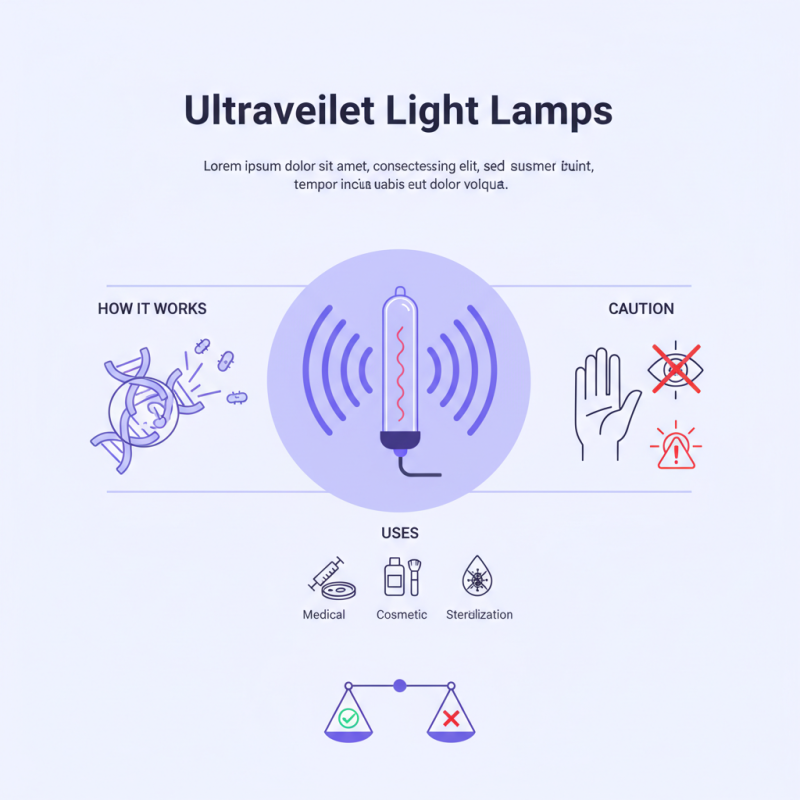
An Ultraviolet Light Lamp is a fascinating tool in today's world. It emits UV light, invisible to the naked eye. Many people use it for sterilization, killing germs effectively. This lamp has various applications, from medical to cosmetic uses.
Ultraviolet light works by damaging the DNA of microorganisms. This process prevents them from replicating. It's a vital part of many disinfection systems. However, the use of such lamps requires caution. Prolonged exposure can harm human skin and eyes.
Besides its benefits, there are still challenges to consider. Not all UV lamps are created equal. Users must invest time to choose the right one. Understanding the science behind Ultraviolet Light Lamp can ensure safe and effective usage. The balance of benefits and risks should always be on our minds.
What is Ultraviolet Light and Its Types?
Ultraviolet (UV) light is a form of electromagnetic radiation. It falls between visible light and X-rays on the spectrum. UV light is divided into three main types: UVA, UVB, and UVC. Each type serves different purposes and has unique characteristics.
UVA rays make up about 95% of the UV radiation that reaches the Earth's surface. They penetrate deep into the skin, causing premature aging. UVB rays are responsible for sunburns and play a crucial role in vitamin D production. UVC rays, although harmful, do not reach the Earth due to the ozone layer. However, UVC is used in various applications, such as sterilization.
Industry reports indicate that the UV light market is projected to grow significantly. A forecast by MarketsandMarkets estimates the UV equipment market will reach $2.8 billion by 2025. This highlights the importance of UV technology in areas like water treatment and surface disinfection. Yet, there are concerns about overexposure to UV radiation. Individuals often underestimate risks. Misunderstandings about UV light could lead to health issues, which is puzzling.
Ultraviolet Light Types and Their Applications
Components and Structure of an Ultraviolet Light Lamp
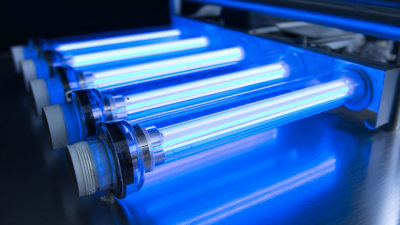
Ultraviolet light lamps consist of several key components that work together to emit UV rays. At the heart of the lamp is a
glass tube filled with gas, typically low-pressure mercury vapor. When electricity passes through the gas, it generates UV light.
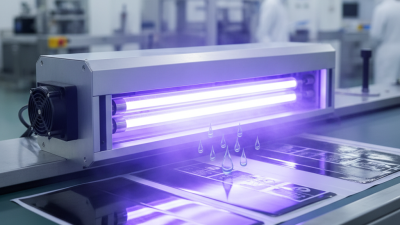
This light is invisible to the human eye, but it has various applications, from disinfection to curing processes.
The outer casing of the lamp must be made from materials that allow UV light to pass through. Quartz glass is
commonly used, as it can withstand high levels of UV radiation. Reflectors are also crucial; they direct the emitted light more efficiently. The design can vary.
Some lamps have multiple tubes, increasing their output.
However, not every UV lamp is created equal. Some might underperform, missing the target wavelengths. It’s also important to note that
safety measures are vital. While UV lamps are beneficial,
prolonged exposure can be harmful to skin and eyes. Users must consider the balance between effectiveness and safety. Careful thought is
needed before choosing where and how to use them.
How Ultraviolet Light Lamps Generate UV Light
Ultraviolet (UV) light lamps play a significant role in various applications. From sanitizing surfaces to curing materials, they generate UV light through specific mechanisms. Typically, these lamps use mercury vapor, producing UV radiation as the gas is excited. The emitted light falls into three categories: UVA, UVB, and UVC, each having distinct wavelengths and properties.
According to recent industry reports, UVC light is effective in killing up to 99.9% of bacteria and viruses on surfaces. This precise wavelength operates between 200 to 280 nanometers. Understanding these details is crucial for users, particularly in settings needing sanitation, like hospitals and laboratories.
**Tips:** Use UV lamps in well-ventilated spaces. Exposure can be harmful to skin and eyes. Regularly check the lamp's intensity, as its effectiveness diminishes over time.
On another note, not all UV lamps have the same efficacy. Some low-cost models may not produce sufficient UVC wavelengths for effective germicidal action. Users should be cautious and do research to find suitable options. Misuse or inadequate knowledge can lead to poor outcomes. Understanding the science behind UV light generation is essential for safe and effective application.
What is an Ultraviolet Light Lamp and How Does It Work?
| Dimension |
Description |
Example Values |
| Wavelength |
The distance between successive peaks of a wave. |
100 nm to 400 nm |
| Types of UV Light |
Different categories based on their wavelength. |
UVA, UVB, UVC |
| Applications |
Common uses of UV light in various fields. |
Disinfection, curing, therapeutic uses |
| Health Effects |
Impact of UV light on human health. |
Skin burns, eye damage, vitamin D synthesis |
| Safety Measures |
Precautions to take while using UV lamps. |
Protective eyewear, skin coverage |
Common Uses of Ultraviolet Light Lamps in Various Industries
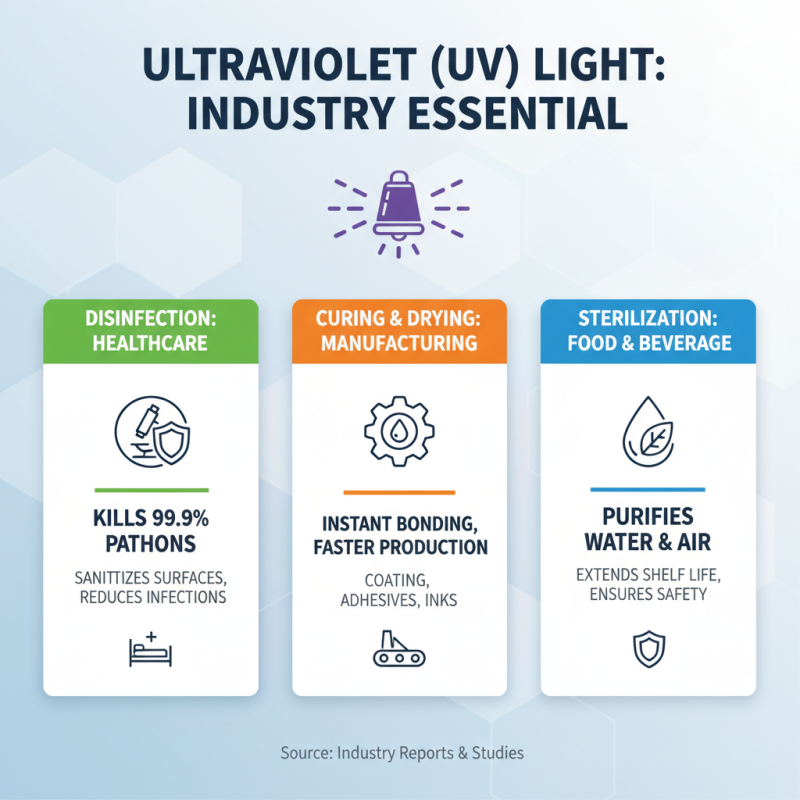
Ultraviolet (UV) light lamps have become essential tools across various industries. Their unique ability to emit high-energy electromagnetic radiation allows them to perform tasks that conventional lights cannot. In healthcare, UV lamps are frequently used for disinfection. A study reported that UV-C light can kill 99.9% of certain pathogens in just seconds. Hospitals utilize this technology to sanitize surfaces and reduce infection rates.
In the food and beverage industry, UV light plays a crucial role in ensuring food safety. According to a report by the Food Safety Authority, UV treatments can eliminate harmful bacteria in water, making it safe for consumption. This method of sanitization is quick and chemical-free, preserving the quality of the products.
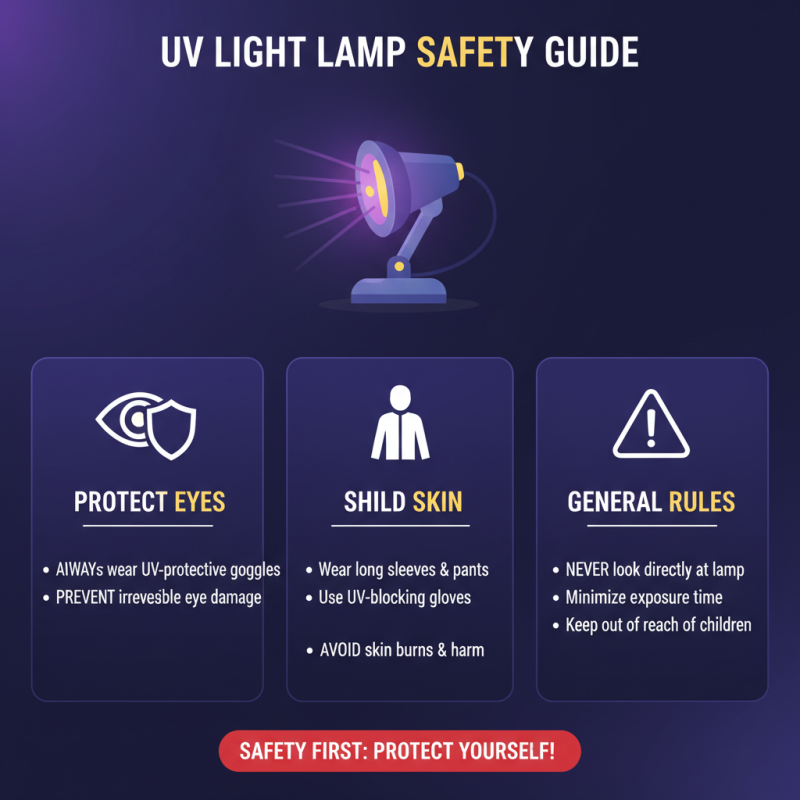
However, reliance on UV lamps is not without issues. Overexposure can harm human skin and eyes. The lack of awareness among workers poses a risk in settings using UV radiation. Training and protective measures may need improvement. Despite the challenges, the benefits of UV light lamps offer powerful solutions for sanitation and safety in many sectors.