What Are the Top UV Systems for Global Buyers?
Global buyers are paying closer attention to Uv Systems as water reuse, air hygiene, and industrial process control expand worldwide. The demand is not driven by one application. Municipal plants need verified fluence. Food factories need cleanable chambers. Hospitals require dependable air and surface treatment. Each setting changes the definition of “top.”
Recent industry data shows why careful comparison matters. MarketsandMarkets estimated the global UV disinfection market at about USD 7.2 billion in 2023, with continued growth expected through 2028. The International Ultraviolet Association also emphasizes dose validation, lamp performance, sensor accuracy, and maintenance discipline. These details often matter more than headline wattage. A bright lamp is not automatically a strong system. Poor hydraulics can reduce delivered dose. Dirty quartz sleeves can quietly reduce output.
Dr. James R. Bolton, a widely cited UV-disinfection researcher, has written, “UV disinfection is a physical process, not a chemical one.” That principle remains practical for international purchasing teams. Uv Systems should be assessed through validated performance, not attractive brochures. Buyers should examine microbial targets, flow rates, UV transmittance, energy use, replacement parts, certifications, and local technical support. Water quality changes seasonally. Real facilities are rarely perfect.
This guide compares leading system categories across global markets. It also recognizes an uncomfortable limitation: market reports use different definitions and forecasting methods. Their figures are useful, but not absolute. The best choice may therefore be less glamorous, yet easier to verify, service, and operate safely over many years.

UV System Basics: How 254 nm and 265–280 nm UV-C Inactivate Pathogens
Ultraviolet-C systems inactivate pathogens by damaging their DNA or RNA. At 254 nm, UV-C energy creates molecular lesions that interrupt replication. A treated bacterium may remain physically present, but it cannot multiply effectively. This wavelength has a long history in water, air, and surface treatment. Field technicians still use it widely because performance data are abundant and measurable.
Wavelength matters, but dose matters more. UV dose equals irradiance multiplied by exposure time. A 265–280 nm source can closely match the strongest nucleic-acid absorption range, especially around 265 nm. These wavelengths are common in modern UV-C LED systems. They may support compact designs and flexible control. However, output can decline with heat, aging, or poor thermal management. The number on a product sheet is not enough.
Real installations need measured irradiance, verified exposure time, and careful attention to shadows. Dust, cloudy water, rough surfaces, and organic residue can shield pathogens from UV-C. I have seen systems appear powerful while delivering weak doses at the treatment point. That mistake is easy to make. Safe designs require shielding, interlocks, warning controls, and documented testing. Independent validation is valuable, especially when buyers compare 254 nm lamps with 265–280 nm LED systems. No wavelength wins every installation. Geometry often decides the result.
Dose and Standards: Compare 40 mJ/cm² Targets with NSF/ANSI 55 Classes
What Are the Top UV Systems for Global Buyers?
A 40 mJ/cm² target is widely used in serious UV purchasing decisions. It means delivered dose, not lamp output. NSF/ANSI 55 Class A systems are generally designed around a minimum 40 mJ/cm² dose. Class B systems commonly use a lower 16 mJ/cm² benchmark for treated public-water applications. These classes are not interchangeable. NSF/ANSI 55 is a certification standard, not a universal global law.
Dose needs context. The U.S. EPA Ultraviolet Disinfection Guidance Manual explains that validated dose depends on flow rate, UV transmittance, lamp aging, sensor accuracy, and reactor design. For example, cloudy water can reduce UV transmittance before the operator notices a problem. A clean quartz sleeve matters. So does the maximum flow at the actual installation point. This is where product sheets can become misleading.
Look beyond the number.
Global buyers should request third-party validation, end-of-lamp-life performance, alarm records, and test conditions. The EPA manual also recommends using a validated operating envelope rather than trusting one laboratory dose value. WHO drinking-water guidance similarly treats UV as a process requiring monitoring and operational control. A 40 mJ/cm² claim may look strong, but it can fail commercially if the system lacks reliable sensors, maintenance access, or local certification support. Some purchasing decisions still overvalue lamp wattage. That is an understandable mistake, but not a safe specification method.
Technology Choices: Mercury Lamps (~9,000 Hours) Versus UV LEDs
What Are the Top UV Systems for Global Buyers?
Technology Choices: Mercury Lamps (~9,000 Hours) Versus UV LEDs
Mercury-based UV systems remain practical for many water and air treatment applications. Their lamps typically provide about 9,000 operating hours. They deliver strong output across established UV-C wavelengths. Replacement procedures are familiar to many maintenance teams. However, lamps require warm-up time and regular cleaning. Small deposits on the quartz sleeve can reduce delivered UV energy. That detail is easy to underestimate.
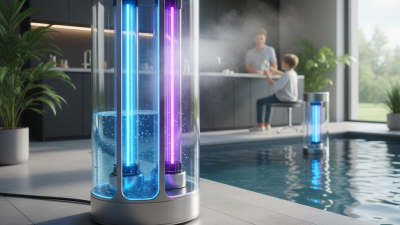
UV LED systems offer instant start-up and precise electronic control. They can switch on only when treatment is required. This feature may reduce energy use in variable-flow installations. LEDs also avoid mercury, which simplifies certain handling and disposal requirements. Their compact design can support smaller equipment rooms. Yet, LED performance depends heavily on thermal management and wavelength selection. Poor heat removal can shorten service life.
Global buyers should compare verified dose data, not lamp wattage alone. Ask for test conditions, flow rates, water quality, and sensor accuracy. A system tested with clear water may perform differently with iron, turbidity, or organic matter. Local voltage, replacement access, and technician training also affect ownership costs. In remote sites, longer LED service intervals can be valuable. In high-throughput facilities, mercury systems may still offer a more predictable cost profile. Neither technology is automatically better. The application decides.
Sizing Method: Use Flow Rate, UVT, Dose, and Validated Sensor Data
What Are the Top UV Systems for Global Buyers?
Sizing Method: Use Flow Rate, UVT, Dose, and Validated Sensor Data
Selecting a UV system should begin with measured flow, not pipe diameter alone. Record average, peak, and minimum flow rates from real operating conditions. Peak flow controls exposure time, while low flow may create excessive dose. UV transmittance, or UVT, shows how much light passes through the water. Test UVT at 254 nanometers using representative samples. Seasonal changes can alter results. A clear sample today may not represent tomorrow’s water.
The required dose depends on the target organism, water quality, reactor design, and validated hydraulic performance. Do not accept a calculated dose without supporting test data. Ask for third-party validation, sensor accuracy ranges, calibration records, and alarm settings. A sensor should measure lamp intensity under realistic conditions. A neat spreadsheet is not proof. Engineers sometimes discover that installation bends, fouling, or unstable flow reduce practical performance. That uncomfortable finding deserves attention.
Tips: Keep a safety margin, but avoid oversized equipment without evidence. Confirm the highest flow and lowest UVT together. Check sensor readings during commissioning. Record lamp age, cleaning intervals, and water temperature. If data conflicts, pause the purchase and retest. Small measurement errors can become expensive operating problems.
Global Buyer Checklist: Certification, Maintenance, and Total Cost of Ownership
Global buyers should judge UV systems by verified compliance, serviceability, and lifetime cost—not lamp output alone.
Request current certificates for the destination market, such as NSF/ANSI 55, CE, or electrical safety approvals where applicable. Check whether certification covers the complete system, not only individual components. Ask for independent dose-validation reports, operating limits, and traceable test records. Certification details matter.
Maintenance can decide whether a system performs well after installation. Inspect the lamp-hour counter, quartz sleeve, UV sensor, and automatic cleaning mechanism. A sleeve with mineral scale may look acceptable but reduce UV transmission sharply. Confirm local access to lamps, seals, sensors, and trained technicians. Review the service interval, calibration process, response time, and shipping arrangements before signing a contract. Small delays can stop production.
Tips: Build a five-year ownership sheet. Include energy use, lamp replacement, cleaning labor, calibration, spare parts, freight, water testing, and planned downtime. Compare cost per treated cubic meter, not purchase price. Ask suppliers to show assumptions. A low quotation can hide expensive maintenance. I have seen buyers overlook sensor replacement because it appears minor. It was not. Also check warranty exclusions, especially for poor water quality or missed servicing. The perfect forecast does not exist, so leave a realistic contingency for mineral buildup, currency changes, and emergency repairs.